
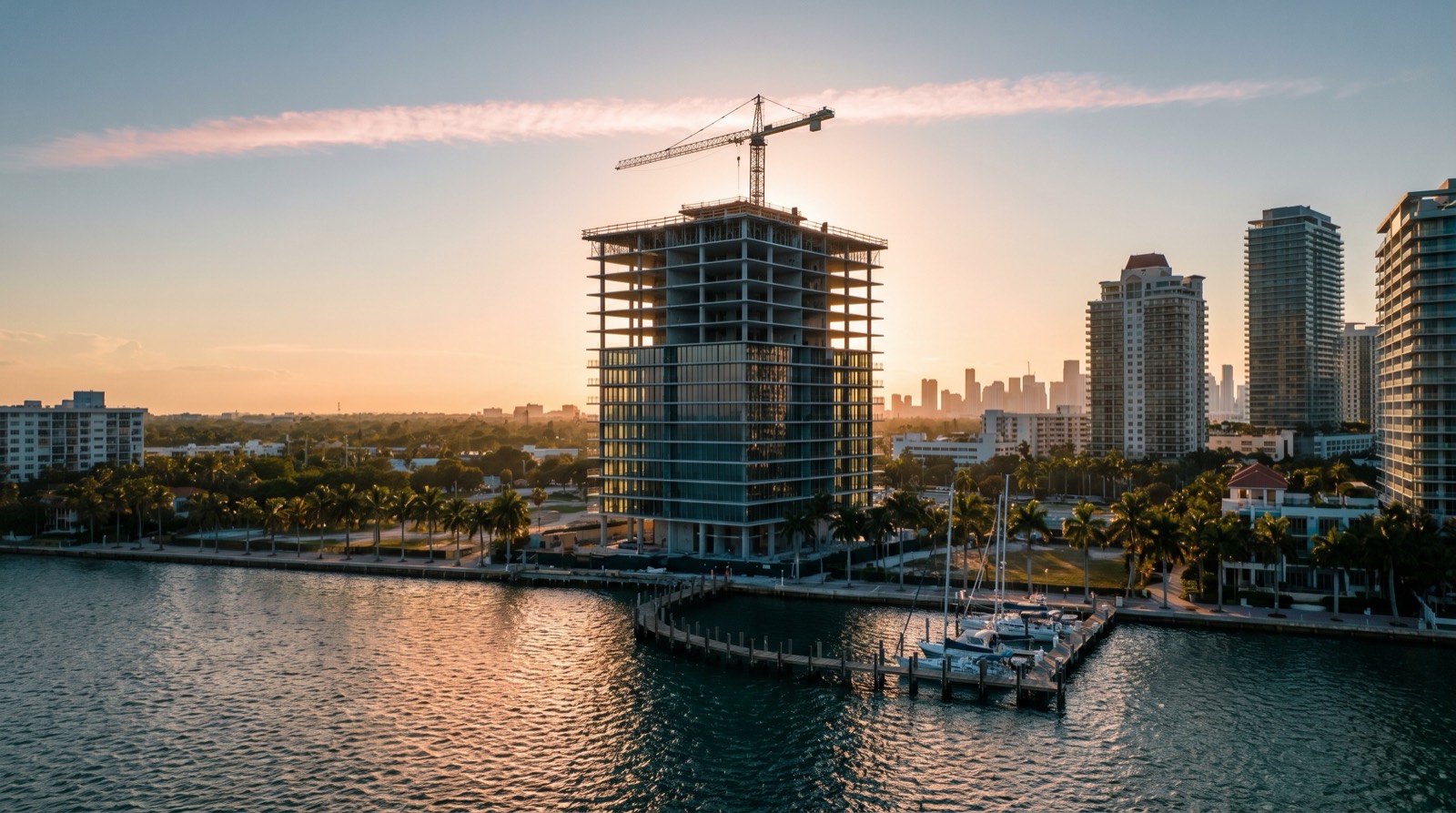
Miami's Balanced Market Is an Entry Point, Not a Warning Sign
For most of the past five years, the hardest part of trying to invest in Miami real estate was simply getting an accepted offer. That era is over. Miami-Dade now carries roughly 2.4 months of supply, homes are closing near 94.7% of asking price, and the median sale price sits around $594,000 after slipping less than 1% year over year. None of those numbers signal a crash. They signal something more useful to a long-term investor: negotiating leverage that did not exist a year ago.
A balanced market is where patient capital outperforms. When inventory is thin and buyers are stacked ten deep, price is set by emotion. When supply normalizes, price is set by fundamentals: rent, replacement cost, and the spread between your mortgage rate and your cap rate. That is the environment Miami has entered, and it rewards investors who underwrite carefully rather than chase momentum.
The Rate Path Is the Whole Thesis
Mortgage rates hovered near 6.5% in late spring 2026, and Miami Realtors projects they could ease toward 5.8% by year-end. That projected decline is the single most important variable for anyone deciding when to buy. Here is the logic that disciplined investors are following: you buy while rates are high and competition is muted, then you refinance when rates fall. The asset you acquired in a quiet, well-negotiated transaction becomes far more valuable the moment cheaper financing pulls a wave of sidelined buyers back into the market.
Trying to time the exact bottom of the rate cycle is a losing game. The more reliable strategy is to lock in the property at today's softer prices and let the rate cycle do the heavy lifting on your monthly carry later.
Where the Cash Flow Lives Now
Not every Miami segment is priced the same. The luxury branded-condo tier, where developers leaned heavily on splashy names, is the part of the market most exposed to oversupply. With tens of thousands of units in the development pipeline, the trophy-condo segment is where pricing power is weakest. For income-focused investors, that is a caution flag, not an opportunity.
The stronger plays in a balanced market are assets that throw off rent today:
- Mid-market condos in established buildings where the median Miami-Dade unit sits near $420,000 and rents have held firm.
- Properties along proven transit corridors. Homes near Brightline stations have seen resale values climb sharply since the line opened, and that premium tends to compound, not fade.
- Small multifamily and rental-ready single-family in neighborhoods with real tenant demand rather than speculative appreciation.
Underwrite to the Rent, Not the Headline
The discipline that separates winners from tourists is simple: model the deal on the rent it produces today, at today's 6.5% financing. If the numbers work now, every basis point the Fed eventually cuts is upside you did not pay for. If the deal only works on the assumption that rates fall and prices jump, it is not an investment, it is a bet.
Miami still has the structural tailwinds that made it a global capital magnet: no state income tax, relentless in-migration of wealth, and a transformation from vacation town to genuine global city. A balanced market does not erase those tailwinds. It just lets you buy into them at a fairer price.
Turn This Window Into Income — With or Without a U.S. License
You do not need to buy a building to profit from Miami's reset. If you know investors who want exposure to this market, the USA Investment Club referral model lets agents and connectors abroad earn real commission by referring qualified buyers to our licensed Miami team, without holding a U.S. license. We handle the transaction; you share in the result. Join USA Investment Club here to start referring buyers into one of the best entry windows Miami has offered in years.