
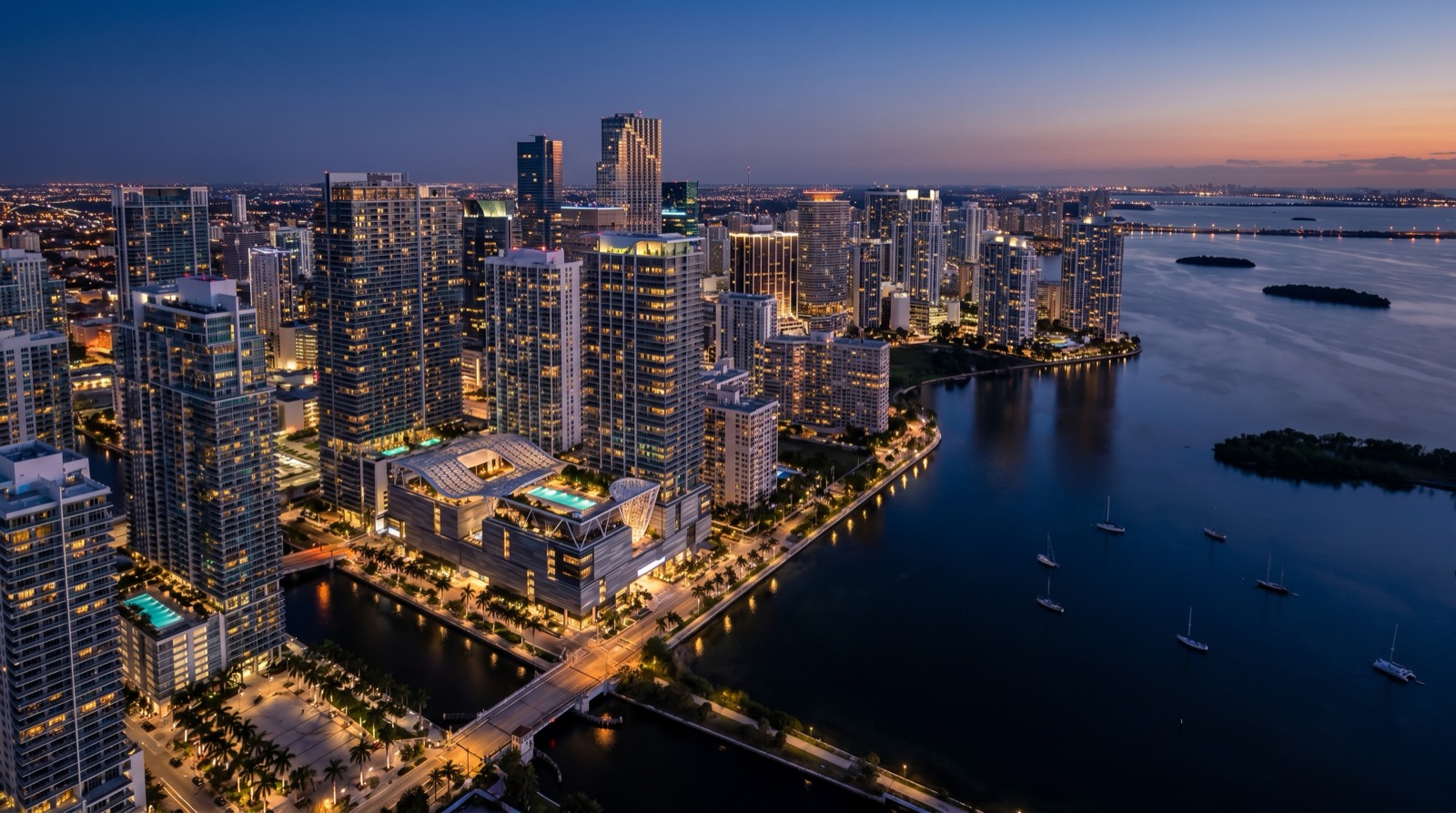
At the Top of the Market, the Money Is Global
Miami has always been a magnet for capital that moves without borders, but the deals crossing desks in early July 2026 show just how concentrated — and how international — the top of the market has become. A billionaire's private megayacht marina, nine-figure penthouse listings, and cross-border hotel partnerships are not isolated luxury stories. They are the leading edge of a structural shift in how to invest in Miami real estate, and they carry lessons for every international buyer and referring agent, not just the ultra-wealthy.
Trophy Infrastructure: The Griffin Signal
Citadel founder Ken Griffin is seeking approval for a private waterfront helipad at his Terminal Island megayacht development on Miami Beach. On its face, a helipad for superyachts sounds like pure excess. Read correctly, it is a demand signal. When the world's most mobile capital builds permanent, bespoke infrastructure in Miami — not a pied-a-terre, but a dedicated marine and aviation footprint — it is a bet that the city remains a primary base for global wealth for decades, not seasons. That conviction ripples downward, supporting values across the luxury and near-luxury tiers where most international buyers actually transact.
Nine-Figure Listings and the Trophy Ceiling
At the same time, roughly $138 million in luxury penthouses came to market across Miami and New York, including a trophy condominium in South Florida. Ultra-prime listings like these do more than generate headlines; they reset the ceiling. Every record-setting penthouse widens the pricing band beneath it, giving comparables room to appreciate. For a foreign buyer purchasing a $1.5 million to $5 million residence, a healthy trophy tier is the tide that lifts the segment — it validates the long-term store-of-value thesis that draws international capital to Miami in the first place.
Capital Without a Passport Line
The internationalization is also visible in who is building. Codina Partners has teamed with India-based MICL Global on a Marriott Tribute hotel in Doral, while Related Group and Elliott Investment Management anchor multibillion-dollar redevelopments. Foreign institutional money is no longer merely buying finished Miami product — it is co-developing it. For individual international buyers, that is reassurance: the same due diligence that satisfies global institutions is validating the neighborhoods and asset classes they are entering.
Why Miami Still Wins the Global Buyer
- No state income tax. Florida's tax structure remains a durable magnet for wealth relocating from higher-tax jurisdictions worldwide.
- Dollar-denominated safety. For buyers in volatile-currency economies, a Miami asset is both a lifestyle purchase and a hedge.
- Liquidity and brand. Globally recognized branded residences and a deep resale market make exit easier than in most international trophy cities.
- Time-zone and cultural bridge. Miami operates as the de facto capital of Latin America, shortening the distance between a buyer abroad and their U.S. asset.
How Agents Abroad Capture This Flow
Here is the part most international agents miss: you do not need a U.S. real estate license to earn from this capital flow. The buyers driving these deals — from Sao Paulo to Bogota to Mexico City — trust the agents they already know. Under the USA Investment Club referral model, a licensed agent abroad introduces the client, USAIC's U.S.-licensed team executes the transaction, and the referring agent earns a share of the commission at closing. It is a compliant, transparent way to monetize relationships you have already built, without the cost and delay of U.S. licensure.
The message from July's trophy deals is consistent: global capital is not visiting Miami, it is settling in. Join USA Investment Club to connect your international clients to vetted Miami opportunities and turn cross-border demand into referral income on every closing.